Pounds, Watts, and BTUs: The Unbooked Liabilities Sitting on Your Data Center Floor
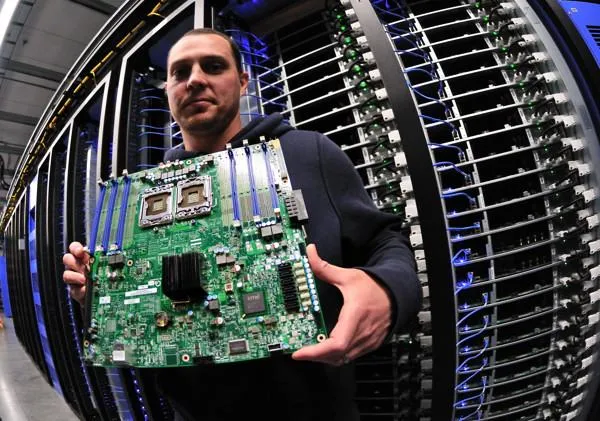
Photo: Intel Free Press, CC BY 2.0, via Wikimedia Commons
Ask a CFO what a server costs and you will get a precise answer: purchase price, depreciation schedule, maintenance contract. Ask what that same server weighs, how many amps it draws at 60 percent utilization, or how many tons of cooling capacity it consumes, and the room usually goes quiet. That silence is expensive.
The Estate Finance Never Sees
Enterprise infrastructure planning in the United States tends to treat hardware as a line item rather than a physical presence. A rack is budgeted as a capital expense, but the consequences of filling it — structural load on the raised floor, branch circuit exhaustion, hot-aisle temperatures creeping past ASHRAE guidelines — are absorbed silently by facilities teams who rarely sit in budget meetings.
The result is a systematic miscalculation. TCO models routinely capture hardware acquisition, software licensing, and vendor support, while omitting the carrying costs of physicality: floor space at $150 to $300 per square foot in primary US markets, power at industrial rates that vary wildly between Northern Virginia and Phoenix, and cooling overhead that can add 30 to 50 percent on top of raw compute draw. A workload that looks cheap on a spreadsheet can be one of the most expensive things your organization owns.
What a Mass Ledger Actually Tracks
The remedy is an accounting discipline borrowed, ironically, from logistics. We propose a mass ledger: a running inventory in which every asset is recorded not only by serial number and cost center, but by weight, wattage at idle and load, and thermal output in BTUs per hour.
The practice sounds pedantic until you see what it exposes:
- Structural headroom. Older commercial buildings, common among enterprises that converted office space into server rooms decades ago, were rarely rated for modern high-density racks. A fully loaded cabinet of blade servers can exceed 2,000 pounds — well past what some raised-floor systems were engineered to hold.
- Power density drift. A rack provisioned in 2012 for 5 kW may now be asked to host accelerated computing at 30 kW or more. The ledger makes that drift visible before the electrician does.
- Cooling debt. Every watt consumed becomes heat that must be removed. Tracking BTUs alongside dollars lets facilities and finance agree on what growth actually costs.
From Inventory to Decision-Making
A mass ledger is not an exercise in trivia; it changes procurement conversations. When a business unit requests on-premises capacity for a new analytics platform, the CIO can quote the true marginal cost — floor space, circuit availability, cooling headroom — rather than defaulting to a stale per-rack figure. Often, the honest answer is that the workload belongs in a colocation facility or a cloud region, a conclusion the spreadsheet-only view would never surface.
It also sharpens retirement decisions. Hardware that lingers past its useful life is usually defended on the grounds that it "still runs." But a mass ledger reframes the question: that idle chassis occupies floor space, draws standby power, and consumes cooling capacity that newer, denser equipment could use. In dense US markets, the carrying cost of doing nothing can exceed the replacement cost within a refresh cycle.
Getting Started Without a Re-Procurement
Implementation is refreshingly unglamorous. Begin with a physical audit of your primary sites — most organizations can complete one in a quarter using existing facilities staff and manufacturer specification sheets. Load the results into your existing CMDB or asset management platform, adding weight, power, and thermal fields alongside cost. Then require that every new infrastructure request include projected density figures, the same way capital requests require depreciation schedules.
An Honest Balance Sheet
Every rack a company owns is a claim against its future: against floor space, electrical capacity, and cooling infrastructure that must be paid for whether or not the hardware earns its keep. Treating pounds, watts, and BTUs with the same rigor as dollars does not make infrastructure decisions harder. It makes them honest — and honesty, in infrastructure planning, is the cheapest form of insurance available.