Borrowing from the GAO: What Corporate IT Buyers Can Learn — and Unlearn — from Federal Procurement

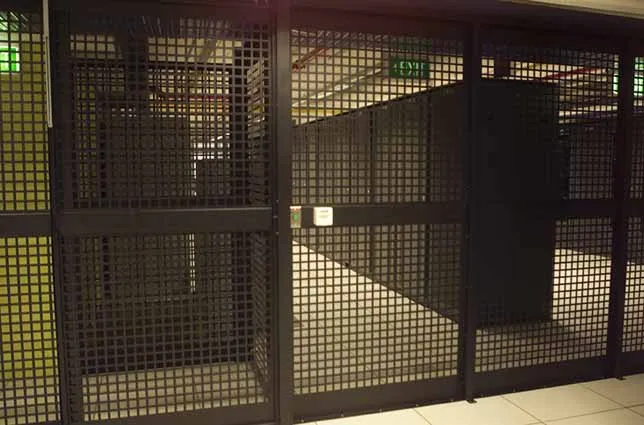
Photo: Charles Edward Miller from Chicago, United States, CC BY-SA 2.0, via Wikimedia Commons
When a mid-market manufacturer in Ohio recently asked its cyber insurer to justify a premium increase, the carrier's response was telling: produce documented due diligence on every infrastructure vendor touching the insured environment, or accept a 40% surcharge. The company's procurement team had no such file. Neither did most of its peers.
That moment — repeated in boardrooms across the country — marks a quiet shift in how American enterprises buy technology. For decades, corporate IT sourcing has run on relationships, references, and speed. Federal procurement, by contrast, has always run on documentation, justification, and auditability. The gap between the two is closing, and not because enterprises suddenly love paperwork. It's closing because external parties — insurers, regulators, auditors, and plaintiffs' counsel — are demanding the paper trail the private sector never bothered to keep.
Why the Pressure Is Coming from Outside, Not Inside
Enterprise buyers didn't wake up wanting federal-style rigor. Three forces are imposing it.
First, cyber insurance. Underwriters now routinely request vendor management evidence during renewal: SOC 2 reports, incident response commitments, subcontractor disclosures. A handshake and a Gantt chart no longer suffice.
Second, regulatory spillover. Rules like the SEC's cybersecurity disclosure requirements and the CIRCIA reporting framework don't apply to most private enterprises directly — but they cascade through supply chains. When a federal contractor or a public company is your customer, their vendor diligence becomes your vendor diligence.
Third, litigation exposure. Post-incident discovery has a way of asking, under oath, why a vendor with a documented five-year breach history was never re-evaluated. The absence of a process is itself a finding.
Worth Borrowing: The Practices That Actually Reduce Risk
Not all federal sourcing discipline is bureaucratic theater. A few elements translate well to the corporate context.
Documented source selection criteria. Federal agencies must justify, in writing, why a vendor was chosen — before the award. Enterprises benefit from a lighter version: a one-page evaluation matrix, completed before the demo schedule is set, capturing the criteria that actually matter (support commitments, exit provisions, security posture) rather than whatever impressed the room that day.
Responsibility determinations. Government contracting officers must verify a bidder can actually perform — financial stability, past performance, capacity. Corporate buyers can approximate this with a 30-minute review: latest financials where available, litigation searches, references from organizations of comparable scale. It costs little and filters out the vendors who look excellent in a demo and fold in year two.
Past performance as a living record. Rather than a one-time reference call, maintain a short post-implementation scorecard for every major vendor. When renewal season arrives, you're negotiating from evidence, not nostalgia.
Defined exit and transition terms. Federal contracts specify data return, transition assistance, and termination consequences in unusual detail. Enterprises that adopt even a simplified version avoid the hostage scenarios that make renewal negotiations so lopsided.
Worth Leaving Behind: The Habits That Only Add Paperwork
Then there's the rest of the federal playbook — and adopting it wholesale would strangle enterprise velocity.
Full RFP formalism for routine purchases. The government's process exists partly to survive bid protests; yours doesn't. A $40,000 networking refresh doesn't need a statement of work drafted in federal acquisition regulation language. Match the rigor to the spend and the risk.
Multiple-award structures and set-aside logic. These reflect public policy goals with no corporate equivalent. Skip them.
The presumption of adversarial negotiation. Federal sourcing assumes the vendor is trying to extract maximum value from a captive buyer. In enterprise infrastructure, long-term partnerships often beat adversarial contracting — provided the accountability documentation exists to keep the partnership honest.
A Practical Checklist for Tightening Due Diligence
For infrastructure and cloud sourcing, a disciplined but workable framework looks like this:
- Before evaluation: Written criteria, weighted and approved by the technical owner, covering security posture, support model, financial viability, and exit terms.
- During evaluation: SOC 2 Type II (or equivalent) reviewed — not just received. Subcontractor and sub-processor disclosure required. Incident history requested in writing.
- Before signature: Support response times, escalation paths, and remedy commitments captured in the contract, not the sales deck. Data portability and transition-assistance clauses included.
- After deployment: A one-page implementation scorecard filed within 90 days. Annual vendor review calendar established.
- At renewal: Past performance record, updated financial review, and a documented go/no-go decision — even when the answer is obviously yes.
The entire apparatus adds perhaps a week to a typical enterprise sourcing cycle. That's a fair trade for the audit trail insurers, regulators, and boards increasingly expect.
The Anker Systems Perspective
In our integration work, we've watched clients with disciplined vendor governance recover from incidents faster, negotiate renewals from strength, and pass insurer scrutiny without panic. The discipline isn't the point — resilience is. Borrow what the public sector got right, leave the procedural theater behind, and build a procurement posture that would satisfy a contracting officer without slowing down your roadmap.