The Pendulum Swings Home: Why Sovereign Workloads Are Returning to the Cage
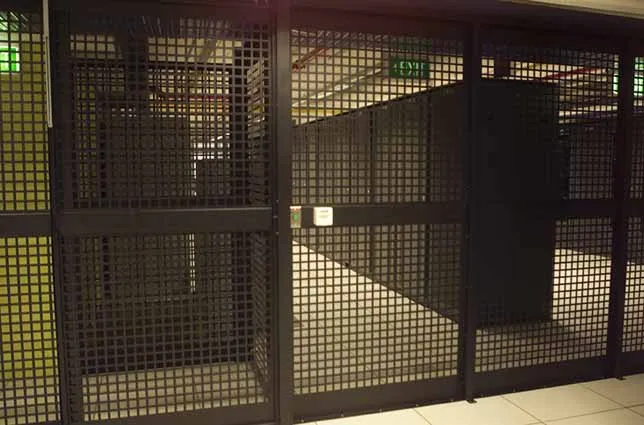
Photo: Lgate74, CC BY 3.0, via Wikimedia Commons
For most of the past ten years, the direction of enterprise infrastructure travel has been one way: out of the data center and into the public cloud. That migration made sense for a vast range of workloads, and it still does. But a quiet countercurrent has been building, and in 2025 it has become strong enough that infrastructure leaders should stop treating it as an anomaly. For certain US-regulated workloads, the pendulum is swinging back toward dedicated hardware, private cages, and infrastructure that lives behind a door your organization physically controls.
This is not nostalgia for the era of raised floors and tape libraries. It is a rational response to a regulatory and liability landscape that has shifted faster than most cloud transition roadmaps anticipated.
The State-Level Patchwork Is Getting Harder to Outsource
Federal frameworks like HIPAA and GLBA have long shaped data handling expectations, but the real pressure now comes from the states. California's CCPA and CPRA, Virginia's CDPA, Colorado's Privacy Act, Texas's data privacy and security act, and a growing roster of similar statutes have created a patchwork of residency, access, and disclosure requirements that no single hyperscaler contract fully neutralizes.
The complication is not that public cloud is non-compliant. Major providers offer extensive compliance tooling, and their attestation portfolios are genuinely impressive. The complication is that compliance in a shared environment is a contractual and procedural exercise — one that depends on subpoena response timelines, government cloud regions, and legal review processes that sit outside your direct control. When a state attorney general or a plaintiff's counsel asks where your data physically resides, who accessed it, and under what authority, the answers become materially easier to give when the storage medium is in a cage with your name on it.
Board Liability Has Changed the Conversation
Directors and officers increasingly understand that data governance failures are personal-liability events, not merely corporate expenses. The SEC's cybersecurity disclosure rules have sharpened this further, requiring material incident reporting on timelines that leave little room for forensic ambiguity.
For boards, the appeal of sovereign infrastructure is not that it eliminates risk — nothing does — but that it narrows the set of actors with access to sensitive data and shortens the chain of custody. A dedicated environment with documented physical controls, organization-managed key material, and a clear personnel access ledger is something a general counsel can describe in a deposition without a conference call to a cloud provider's legal team.
A Framework: Which Data Earns the Cage?
Not everything belongs back on dedicated hardware, and pretending otherwise would repeat the cloud-first mistake in reverse. We recommend a three-question screen for each regulated workload:
1. Does a residency or access mandate apply that your cloud contracts cannot satisfy outright? If a statute, customer agreement, or sector regulator requires you to warrant physical jurisdiction or restrict administrative access to named personnel, dedicated infrastructure may be the only clean answer.
2. What is the blast radius of a custody failure? Workloads containing PII, protected health information, or payment data carry asymmetric downside. Workloads serving public-facing content or analytics on aggregated data carry comparatively little. Weight accordingly.
3. What is the operational cost of ownership? Be honest here. A cage you cannot staff, patch, and monitor is worse than a shared environment you can. Sovereignty without operational maturity is just risk with extra steps.
Workloads that answer yes to the first question, high on the second, and manageable on the third belong in the cage. Everything else can stay where the economics favor it.
Selling 'Hybrid by Design' to Your Shareholders
The term 'hybrid' carries baggage from a decade of PowerPoint decks that used it to mean 'we have not finished migrating.' Reclaim it deliberately. A hybrid-by-design posture is not indecision; it is the deliberate placement of each workload in the environment whose legal, economic, and operational characteristics fit it best.
When presenting this to shareholders or the board, frame it as risk architecture rather than infrastructure spend. Three points land well:
- Regulatory optionality. State privacy law is a moving target. Owned infrastructure lets you satisfy the strictest mandate without renegotiating a platform relationship.
- Cost predictability for stable workloads. Long-lived, high-utilization databases and systems of record often carry a lower total cost of ownership on owned hardware, and the board can verify that arithmetic.
- Demonstrable governance. Physical custody, managed key material, and a named access ledger are controls an auditor can touch. That translates directly into disclosure confidence.
Anchored, Not Adrift
The organizations that will navigate the next decade of US data regulation most comfortably are not the ones that went all-in on any single platform. They are the ones that matched every workload to the environment that genuinely fits it — and kept the most sensitive assets anchored where the law, the board, and common sense all agree they belong.