Ambient Until It Isn't: Drawing Time on the Architecture Diagram
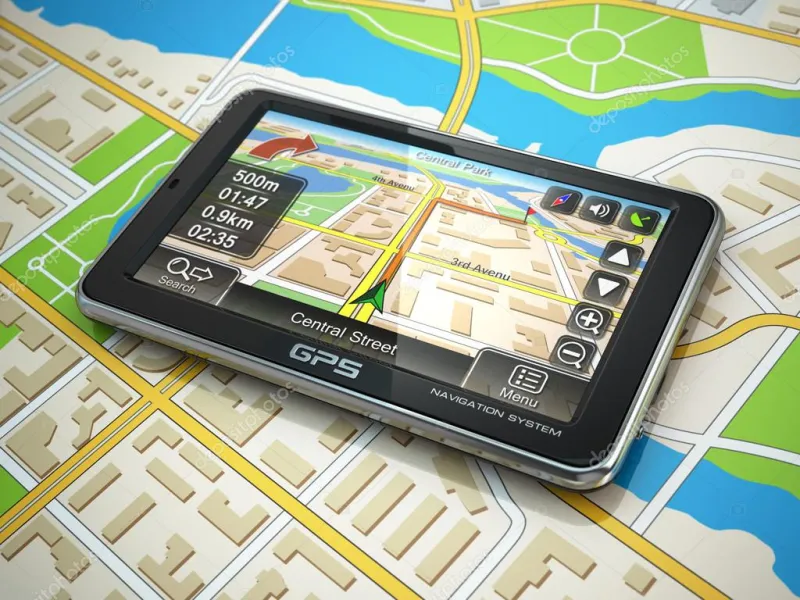
Photo: GPS antenna rooftop timing receiver network equipment, via st2.depositphotos.com
Every architecture diagram has a box for identity, a box for storage, a box for the network core. Almost none has a box for time. It is assumed the way clean water is assumed: present, invisible, and somebody else's problem until the day it is not.
That assumption holds until it does not, and when it fails it fails upward. A drift of a few seconds is an inconvenience. A drift of a few minutes is an outage that presents as something else entirely, and the diagnosis can consume an entire incident bridge before anyone thinks to ask what the clocks believe.
What breaks first when the clock slips
Authentication is usually the first casualty. Kerberos-based systems reject tickets outside a default five-minute skew, which means a few minutes of drift across a domain controller can lock out an entire workforce at once. Short-lived tokens and signed service requests have similarly narrow tolerances. Certificate validation windows narrow further.
Then come the quieter failures. Distributed databases that rely on timestamp ordering begin accepting writes in the wrong sequence. Log correlation breaks, so the incident timeline you reconstruct afterward is subtly wrong in exactly the moment you most need it to be right. Billing and metering systems attribute usage to the wrong interval.
For regulated organizations, the exposure extends beyond operations. US broker-dealers must keep business clocks synchronized within a defined tolerance of national time standards under FINRA Rule 4590, and certain order events captured under consolidated audit trail requirements are held to microsecond tolerances. Recordkeeping rules for electronic communications and books and records assume the timestamps are true. When they are not, the problem is not an outage. It is an evidentiary one.
The concentration hiding in a single antenna
Ask three questions of your estate. Where does time originate? How many independent paths carry it to a given host? What happens if the first answer is lost?
For a surprising number of enterprises, the honest answer to the second question is one. A single rooftop antenna feeds a single receiver, which feeds a distribution amplifier, which feeds a stratum-one server or a pair of them. Every host below that chain has one source and no meaningful holdover. The design has no redundancy at the layer that makes the redundancy possible, and the failure is not gradual; it is a step change at the moment of loss.
The environmental picture argues for attention rather than alarm. GNSS interference is documented and increasing, from jamming incidents reported near major airports to spoofing activity that has affected maritime and aviation navigation. A rooftop receiver in a dense urban core or near a logistics facility is not in an exotic threat environment. It is in a normal one.
Three dependencies you have probably not named
Most estates draw time from three places at once without documenting any of them.
The first is GNSS at your own facility, typically GPS with a disciplined oscillator in holdover. The second is your cloud provider's time service, which is excellent and which you neither control nor can audit at the source. It depends on its own atomic clocks and its own GNSS infrastructure, and it is offered under an availability commitment rather than a drift guarantee. The third is the public NTP pool, unauthenticated by default, trivially spoofable, and frequently configured on network gear as a fallback nobody remembers setting.
Each is reasonable in isolation. Together they form an undocumented dependency graph with at least one unauthenticated edge and at least one single point of physical failure.
Instrumentation that reveals drift before the incident does
Treat offset as a first-class metric. Export, per host and per network device, the current offset from the selected source, the estimated frequency error, the time elapsed since last successful synchronization, and the identity of the source in use. Alert on source change as an event in its own right, not just on offset breach.
The most useful exercise is the one teams avoid: a controlled holdover test. Schedule a window, sever the primary source, and measure what actually happens across each workload class. You will learn your true holdover budget, which is almost always shorter than the specification on the oscillator's datasheet suggests, and you will discover which systems silently accept a degraded clock rather than refusing to operate.
A resilience checklist for teams starting from zero
- Inventory the time chain for every host class, including appliances, hypervisors, and network gear
- Identify physical single points: antenna, receiver, cabling, distribution amplifier, and the closet they sit in
- Require at least two independent sources per critical system, with authenticated protocols such as network time security where network delivery is used
- Hold a local oscillator with a documented and tested holdover budget for each workload class
- Separate workload classes by tolerance, and do not let microsecond-dependent systems share an unmanaged time domain with systems that need only seconds
- Review contracts for time service availability commitments, notification obligations when upstream sources change, and audit rights
- Re-run the holdover test annually, and after any change to the antenna, roof, or network core
Time belongs on the diagram. It has a source, a distribution path, a failure mode, and an owner. Naming all four is the difference between an ambient utility and a managed dependency.